I really enjoy taking one-off tennis lessons. I like to see how I will respond and I also like to see how a tennis pro facing the challenge of helping a student they are unlikely ever to see again faces the challenge. This time the fun took place during an unusual heatwave that made it all the way to California’s Central Coast where we have had a four-day getaway planned for months.
The pro was a lefty and even older than me, if you can imagine. I was quite upfront that I was looking for someone to rally with but that instructive comment was always welcome. The rally lasted all but five minutes before the question, “Can you slice your forehand?” I said I could but found the shot less than common. Sure, it’s fun but it’s seldom needed or effective. But, I was game so I hit a few to show the shot was no problem for me
Here’s where things got weird. The coach wanted to talk about the split step. It seems that a lot of his students land flat footed when asked to split step. He then asked if I knew about split step and float? I confessed that I did not. The coach went on to say that split step and float means the player lands on one foot, so as to aid their ability to move in that direction.
No.
That’s what I said, for a couple reasons. First, how is the player supposed to know which direction they need to know at the moment they split step? Second, the idea of hopping off both feet and landing on one seems like an unwise practice.
Sorry.
After the lesson I really felt badly. You see, the coach had hit on two genuinely good points. The first was a more level driving motion on high bouncing one-handed backhands. The second was to use the ball point to rotate the off arm toward the striking arm to aid in spacing. Both of those thoughts worked great.
Yup, I would take another lesson from this guy.
Yes, I think he was dead-wrong about the split step.
Yes, I learned something during the lesson and I enjoyed myself.
Tt: When did you start playing tennis and who got you into the game?
Jack Oswald: I started playing tennis when I was about five years old, first in the UK. My dad got me into tennis. He was big into tennis, both watching and he played a little bit as well. All of my family played a little bit of tennis at one point for a little while, but I was the one that really stuck at it.
My parents moved to the US when I was five years old, and I really got into it there. There were so many more courts, so many more players around. The weather was better for tennis, to be honest, and I just really got into it. However, it was around about 10 or 11 years old that I became obsessed with tennis, and I really wanted to make it pro. It became basically my mission in life for the next 15 years, I think.
Tt: I was going to ask you Why Bags but instead I’m going to tell you what I think—pretty much all tennis bags suck, even though I’m sure you already know that. First, most tennis bags are made poorly. When it comes to style it’s whatever makes the logo the biggest wins. It’s one area where golf beats tennis hands down. A golfer can buy a golf bag that’s designed to be carried by the player, carried by a caddie, put on the back of a golf cart or the kind of golf cart you push or pull. I cannot figure out why tennis bags are so bad. Help me out here, Jack!
Jack Oswald: I know, I feel the same way. I saw so much innovation in the bag space in so many different industries, like the outdoors space and golf, which is probably the closest thing to tennis. I believed there could be something better we could be doing here.
Also, as I was traveling as a pro tennis player, I felt firsthand, or came across firsthand, the issues of traveling with tennis rackets from country to country on planes, on trains, buses, from hotel room to hotel room. I wanted something that could be better, really, for myself. It was quite a selfish thing to begin with, and I became more aware as it went along that the industry, the tennis industry specifically, needed some innovation.
I have felt like this for a while with tennis that some of the areas of tennis are quite antiquated, and it’s caught up a little bit, I think, over the last few years. Especially when I was playing seriously, the tennis world was quite antiquated and the way it was set up really needed some innovation.
Tennis bags were something that I had an experience firsthand with, more from the usability side of things, from using bags. I really wanted to first of all make it easy for myself and then for everyone else, honestly, to travel with tennis rackets and to make it easy for people to play tennis on it during their daily routine, on a daily basis, whether that’s from work travel and anything like that.
I also wanted to make things that really were suited to the player and the person in their daily routine and not just, like you said, big logos and bright colors and things that really have no performance or practical impact.
Tt: What did playing professional tennis teach you about what a traveling tennis player needs to have, right at hand?
Jack Oswald: Honestly, it was the constant traveling as a professional tennis player that really taught me a lot about what could be made easier for people when they are traveling for tennis. I mean, I came across it first hand and had a lot of experiences carrying gear around.
The most tiring part of the whole process of being a tennis player was traveling. I really felt, by making it easier for myself, I could eventually make it easier for others. If there were an easier way to travel as a tennis player, I believed that could affect everybody, not just professional players but people who are trying to fit tennis into their daily routine.
My goal was to make a difference there and, in some way, help people be more active and carry their passions with them. Yeah, I think it was the constant going from place to place that really helped me understand how traveling for tennis could be made easier with the right gear.
Tt: How long did Cancha’s prototyping stage last? Did you evaluate all of the photos or did you reach out to other tennis players?
Jack Oswald: Honestly, too long. I started designing the bags in 2018, knowing nothing about soft goods design, product design in general. I really went into the deep end, but we didn’t know much about it. I spent a lot of time traveling to trade shows, speaking to designers, taking samples with me to employment tournament from 2018 until 2020, even 2021. It was a long time, three or four years of design and no sales coming in, which was difficult because I didn’t have much money to play with to do this.
We ended up doing a Kickstarter campaign and raising some money to begin with from friends and family that really helped me to get things off the ground. It was a huge learning experience. I learned so much about product design and the soft goods world, making bags, and also the practicality of traveling with bags and what you actually needed.
I went through many, many prototypes. Many of them broke on me during my travels, which was really frustrating at the time. There’s nothing worse than a bag breaking on you when you’re mid-trip, but it was a really humbling experience. It was a really enlightening experience. I learned a tremendous amount, and I still have all those prototypes saved. They remind me of how far we’ve come.
Tt: What about materials? How many did you have to evaluate before you settled on the final Cancha material?
Jack Oswald: To be honest, materials are an ongoing thing. We’re constantly refining materials. It’s something that never really ends. We have gone through many different versions of the materials we’re using. A bag has over a hundred components, so we’re constantly evaluating and looking at new innovations in the material space. I think there’s a whole lot more we can be doing there as well.
It was really through testing and seeing what was out there and all the different changes that were going on in the space, and seeing what worked for us and retesting it out that helped us arrive at a starting point. From there on, we’re just constantly evolving.
Our bags have new materials all the time. Sometimes people don’t notice them because it’s been a slight improvement that is just a quality of life improvement, and other times it’s a big change that people really notice. I think it makes all the difference. I think that constant drive to improve our products, existing products as well as new products, has helped us a lot over the years.
Tt: I’m lucky enough to have both the Cancha Racket Bag Pro and the Original Cancha Tennis Bag. I love them both but if I could wish for one thing it would be more and bigger zippered pockets. Do you feel my pain or am I crazy?
Jack Oswald: I agree, and feedback is a thing that we take extremely seriously. I’m constantly hearing from people about what they love about the bag, but also what they don’t love about the bag they’re using. One thing is we can’t please everybody, and you have to pick a side on some things and what we feel is best. I agree there’s certainly improvements that can be made, and we’re constantly making those improvements.
We get feedback all the time, like I said, from customers, and we take it seriously. I am constantly working with my team on new improvements, new designs, constantly traveling to visit our manufacturing partners and material suppliers. It’s an ongoing, never-ending process; that’s what’s so great about it.
I think if you look at where we’ve come from there until now, I think there’s been a huge amount of improvement. I appreciate your feedback because that it’s something that we can certainly do better, and I think that’s what this is all about
Tt: Every time I drop by the Cancha website I see another cool product that I need, Need, NEED. If we hit the Fast Forward button forward to 2030 will Cancha still be a tennis brand, a lifestyle brand, or both?
Jack Oswald: That’s interesting. I wouldn’t even necessarily consider ourselves a tennis brand specifically. I think that we have a really cool niche in the tennis space, but people who play racket sports of all kinds buy our bags, and people who don’t as well buy our bags. Everyday carry bags are part of our line-up now, and we’re constantly building out because we want to be part of people’s daily routine, helping them be active in all areas. I think my experience as a tennis player, as a traveling tennis player, has helped us really innovate in that space, but I think there’s a lot more we can do.
I want us to be both. I think we can talk in a very niche way to tennis players and meet their needs, but I think we can also be something for other people as well. I really appreciate what you say about the new products and the innovation. I think that that really means a lot to me because I’m trying my absolute best as a founder of a very young company to come up with things that I really feel proud about.
I don’t go into product categories or even product lines without feeling like I can really make a difference in the space. I have a lot of ideas for things that we can be doing. Sometimes I have more ideas than resources to do them, which is probably a good thing; it keeps me focused. I can’t say exactly where we’ll be, but I think there’s a whole lot of cool stuff in the pipeline that I’m just so excited to share.
Tt: Thank you, Jack, for taking the time and for being a good friend to tennis players everywhere.
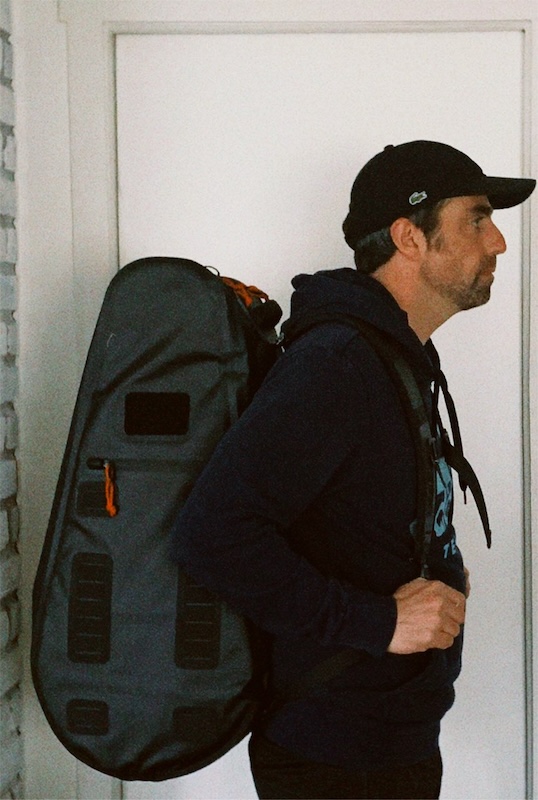
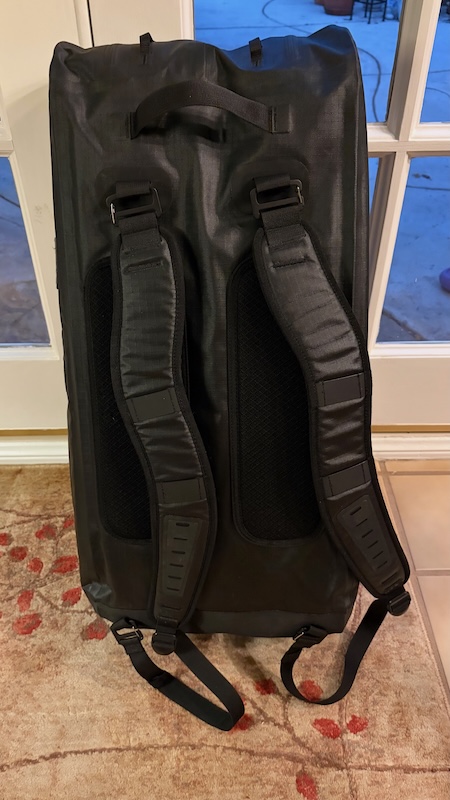
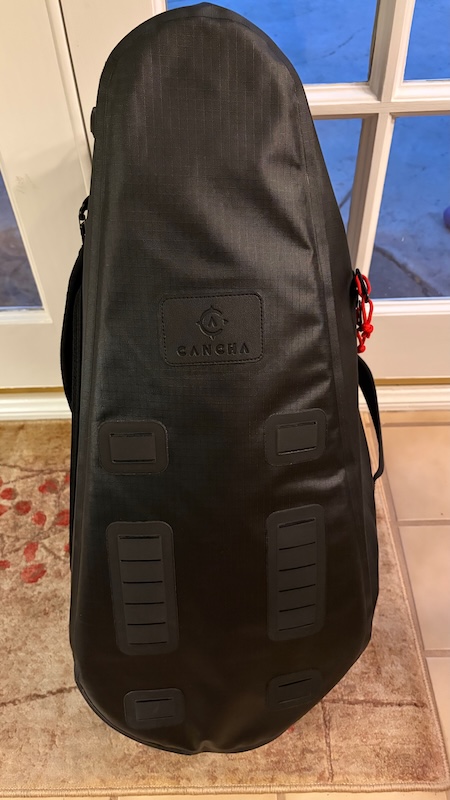
MIB has been using the Cancha Racket Bag Pro for a year. I know because I shipped the bag to him last February. He’s been using it as his one and only bag ever since.
Now, MIB is not your typical recreational player. No, he’s a three to four day a week doubles warrior. He not only admits to being hard on tennis gear, he occasionally celebrates the fact. Tennis racket blood sacrifices into trash cans and the like—you get the idea. When MIB told me he had shipped the back back to me I was expecting the worst. Instead, the Cancha Racket Bag Pro looked new.
Have a look.
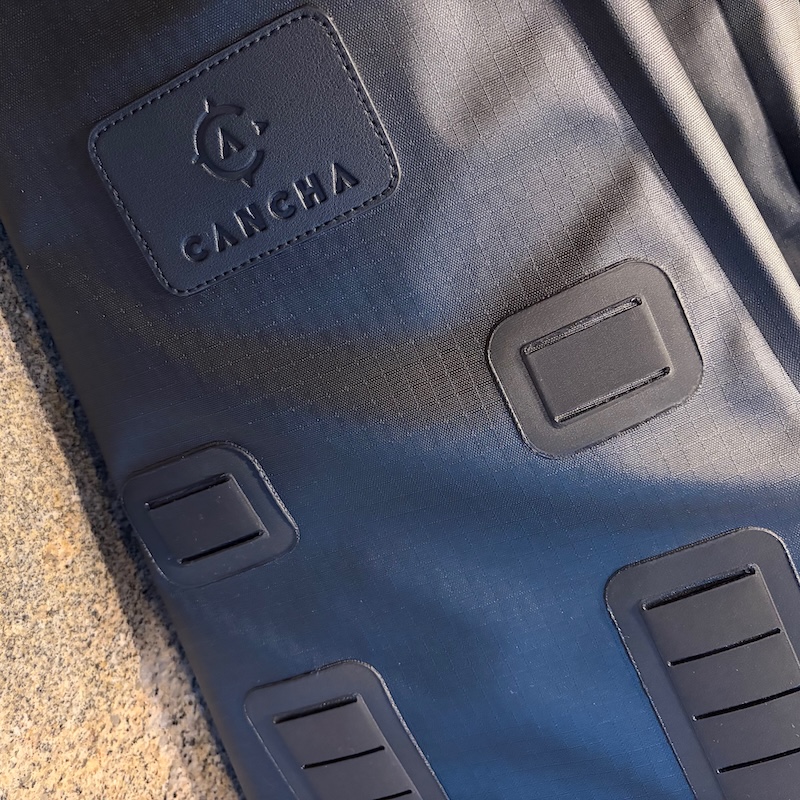
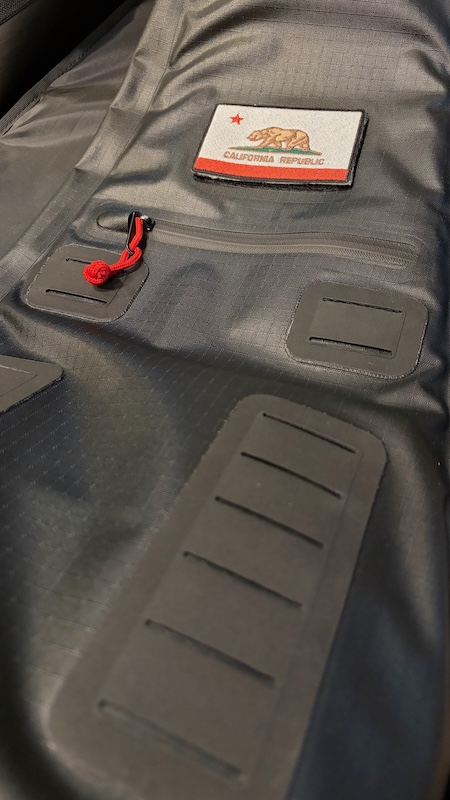
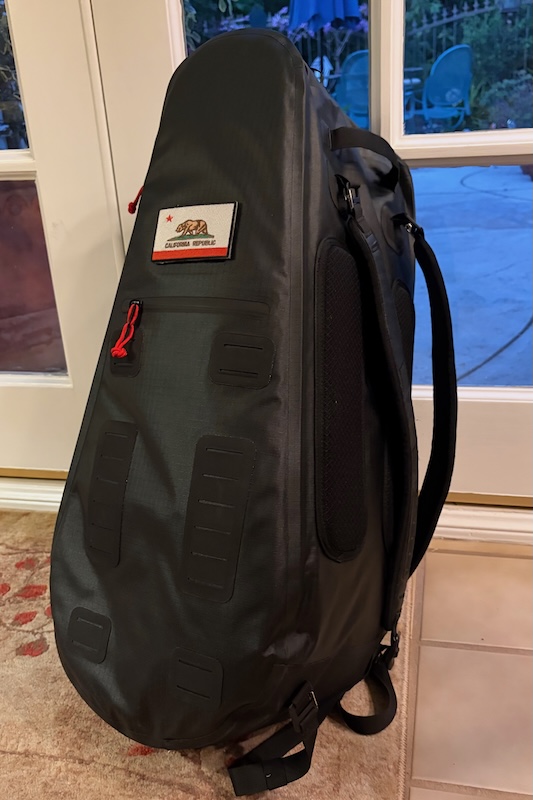
MIB used the hell out of the Cancha Racket Bag Pro but you could not tell by how the bag looks after a full year.
Zippers are perfect.
MOLLE points are perfect.
Fabric is perfect.
Straps and handle the same.
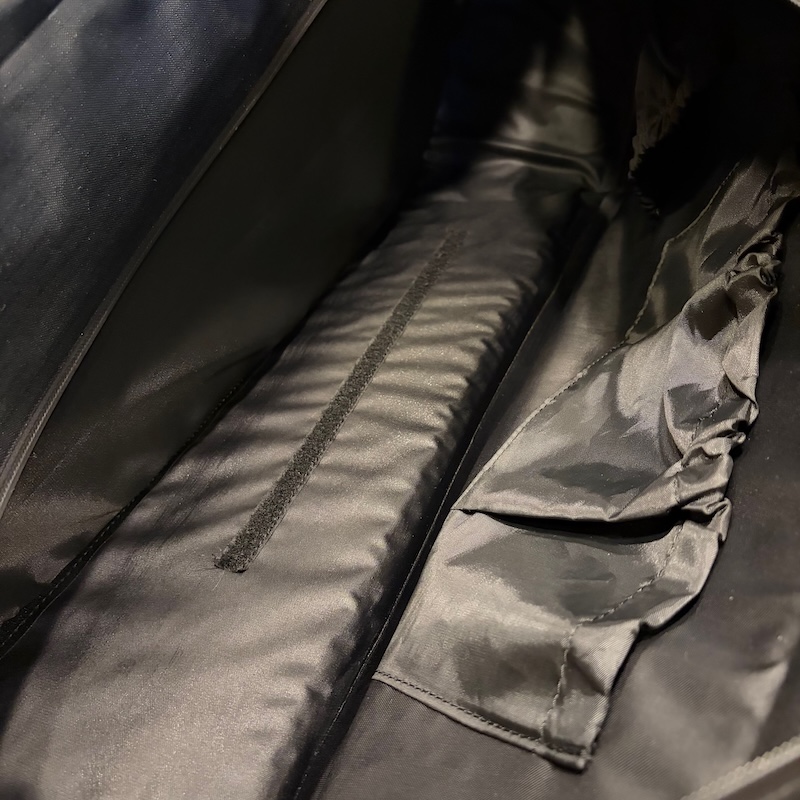
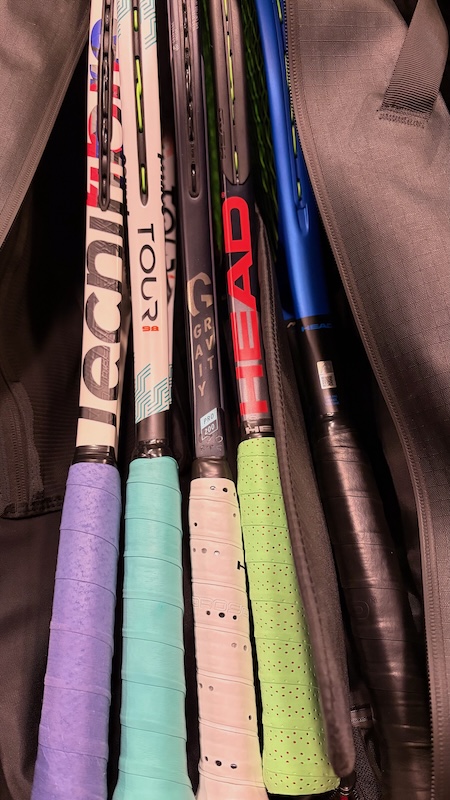
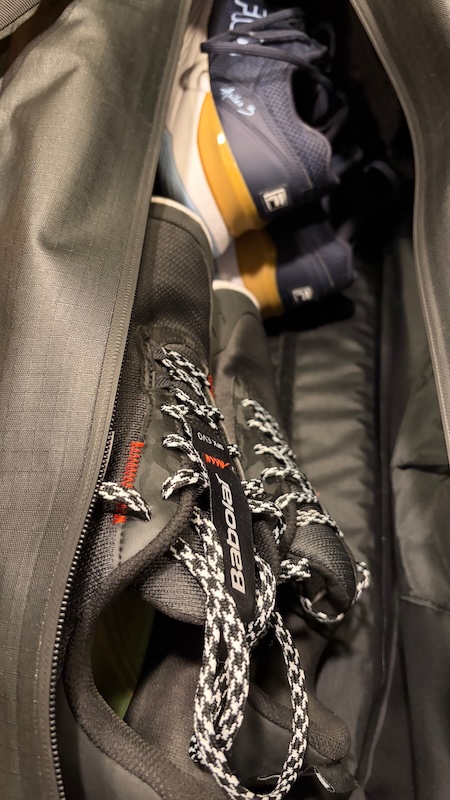
I am quite certain the bag could pass for new. Ok, so my trusty California patch would give it away but otherwise the bag looks like new. So, now it’s my turn with the Cancha Racket Bag Pro. It swallows up my rackets and two pair of shoes and everything else that needs to be inside. I am really looking forward to traveling with the bag on a tennis trip later this month and for my birthday getaway in April. I will report back once I get the Cancha Racket Bag Pro out on court. But if I were you, I would cut to the chase and expect me to be even more impressed with this fantastic bag once I have had the chance to use it myself. Well done, Cancha! Tt
When I started playing tennis, MIB warned me I would find it a challenge to find suitable tennis partners. He was right. My plan, to engage in formal instruction rather than developing what I somewhat disparagingly have referred to as a park game was the right way to go—for me. The downside was that the social or networking aspect of tennis—the ability to get a game or a hit—had to be developed after I’d gotten fairly adept at hitting the ball. Connections are not always easily made. So, I want to write a bit about a few of the tennis partners I’ve shared a court with.
Phil: I found Phil on the Tennis Players Looking for partners database at Calabasas. He was a commercial property manager. He emphasized that he only did commercial, no residential. When I asked him why he said it was because a commercial property manager didn’t have to listen to as many sob stories as a residential property manager. “You know, it’s not personal. You’re not paying. It’s time to move your business or go out of business.” It made sense. Phil was 45 I think, but his pattern of play has become well-known to me over the last year or so. Even though he was in decent shape, he didn’t move much. So, I either had to hit it right at him, preferably at his forehand, or my ball was going straight to the back fence. He did give two interesting bits of advice. First, was about two local guys who organized mixed-doubles meetups, one at CSUN and the other at Sherman Oaks Park. His other bit of advice was a good one. Phil said, “I’ll tell you what I’ve learned about doubles. Only play mixed. Taking out 50% of the testosterone out of tennis makes the game a lot more fun.”
Stan / Johann: These guys were great fun. I started out with Stan, a mid-40s accountant. He’d been playing for years but wasn’t very good. He moved like a fit 40 year old, which I enjoyed. We were hitting once a week and chatted about the idea of playing doubles. As the birth of his daughter drew near, he was nice enough to pass me off to his buddy Johann. He was more fit but his tennis skills were a little shaky but he was such a pleasant guy. Then one day he just kind of vanished. When he surfaced again he said he’d been inundated by work and family life. I get it.
Brisbane Stew: I was practicing my serve at The Rose Bowl, earbuds wedged into my ears, when I thought I heard someone talking to me from the court next to me. That someone was none other than Brisbane Stew. He was looking for a quick hit so we rallied for a while. Turns out he was a pilot for Qantas and found himself in Pasadena for a few days before flying back to Australia. A couple years younger, but a lot more fit, Stew gave me all I could handle. In fact, he was a big motivation in my (somewhat shaky) decision to convert to a two-handed backhand. We tried to meet up once a trip and I had gotten used to an occasional text from him saying when he would be in town. Stew has an excellent serve and likes to play angles you would expect to see in a good doubles match. Then one day Stew told me Qantas was changing planes for the BNE to LAX flight. I hope I’ve not seen the last of Brisbane Stew. He was great fun to play with.
Pasadena Steve: The tennis gods take and then they give. Not long ago I was practicing my serve at Grant Park in Pasadena when Pasadena Steve strolled up, resplendent in his bucket hat, and asked me if I wanted to hit a few balls. Since then, we try to meet up every week or so. Steve’s a retired schoolteacher from LAUSD and is a relatively new Pasadena resident and a refugee from nearby Glendale. There’s a lot of talking during our sessions and that’s fine by me. It’s nice to blather on about politics, writing, baseball and Mexican food with someone who shares many of my same reference points. Steve plays in a long-established doubles group at the Rose Bowl that’s been going through some changes of late with one player going to the great tennis court in the sky and another threatening to move. Tennis is always about adjustment.
MIB: I will always be able to brag that someone traveled 2,000 miles to play tennis with me, on my birthday no less. Sure, that was MIB. And, sure, he was in Los Angeles on business but he still went out of his way to extend his trip by a day so he could get all the way to hell and gone (Calabasas) on my birthday. We played during my lesson with Caesar and it was a great experience for me and one I detailed in Tennis thing the book.
Then, last summer, following our family reunion in the QCs, we made the trip to SE Michigan to see the MIB in his own back yard. Yes, tennis was played. Yes, bourbon was sipped. Yes, LPs were played. Playing tennis with MIB was a hoot. He honored me by playing full out and I really savored the challenge. It reminded me of the movie The Rookie, where high school baseball players in a small Texas town in get better by trying to catch up with the major-league fastball of their coach, Jim Morris.
I think you have to see high-level athletic performance to get an Idea for how close you can get to it yourself. Better than seeing is actually experiencing. I imagine some people would shrink from such experience, worried about proof beyond doubt that they could never deal whatever the athletic prowess they admire. Me? I think the experience itself can exalting, so long as one is serious, like I was when I played with MIB. Playing with MIB, even more so than Stew, gave me the sense of what I could do and what I could not. It clarified the size of the court and what it meant to actually cover it. One thing is certain, if I were lucky enough to play with MIB on a regular basis I would be a far better tennis player.
Federer said that in tennis you could feel your opponent through contact with the ball. As soon as I heard this I nodded. The same is true in baseball. I can still remember the sense of hitting a heavy slider off some guys. My hands remember the feeling and in my brain that fragment of sense-memory connects me with those guys, even after all these years. It’s only been a few months since I played tennis with MIB but I still remember how it looked and felt.
Lord willing, MIB and I will find ourselves on another tennis court someday soon. I’m looking forward to it.Tt
About a month ago, I was playing with Pasadena Steve when he lobbed me—successfully, as it turned out. I say as it turned out because I got to the ball in plenty of time. The problem was that I was still going back, well beyond the baseline, waiting for the ball’s first bounce to finally be in the zone for an overhead. It was the first time we’d ever played on this court and there was a lot going on. The adjacent court was full of kids taking a group lesson. A couple parents were using our court’s bench to watch their kid.
Worse, as I moved back for the ball I had the sense I was getting close to the fence. I was, but I wasn’t so close that my next step would have me crashing into it. At the moment I was slowing down and raising my racket above my head, I lost my footing.
It was a classic case of tanglefoot.
I knew I was going down, but there was little I could do about it other than try to roll into my right side as gently as possible. I hit with the right front of my right knee, then the outer part of my right knee and then my right hip before settling onto my back to appraise the damage. My hip hurt and my knee started to sting. Then I realized I was bleeding from another abrasion on my right elbow. But, overall I felt Ok, so I got back on my feet. By then I could hear Pasadena Steve—three years older than me—calling out to see if I was Ok.
In the moment, I considered asking him if I looked like a big fucking baby. Instead, I picked up the ball and fed him a forehand.
“Right back on the horse,” Steve called.
Yup.
Steve’s a nice guy. He’d just finished reading my first novel and had pages marked with Post-its so he could remember his questions. As I drove him home, I felt just a little shocky, like I had just been in a fender bender.
My elbow was still bleeding but Pasadena Steve went on asking questions:
Now, was Ally based on a little girl you knew?
Me: “Yeah, she was based on a kid my ex-wife taught, second grade, as I recall. Her name was Daisy and she had terrible asthma yet her idiot parents both smoked at home in their tiny two-bedroom apartment.“
And what about the name, Gerry Garcia?
Me: “I wanted a name that was a little odd, Gerry with a G, and Garcia, vaguely Spanish sounding yet the guy’s a pale-skinned redhead. So, nothing really fits Gerry Garcia, not even his name.”
Steve’s what I call a kindly and gentle reader. Even though he reads a great deal (he’s in three book clubs) he’s not jaded. He’s still ready to enjoy a new book on its own terms.
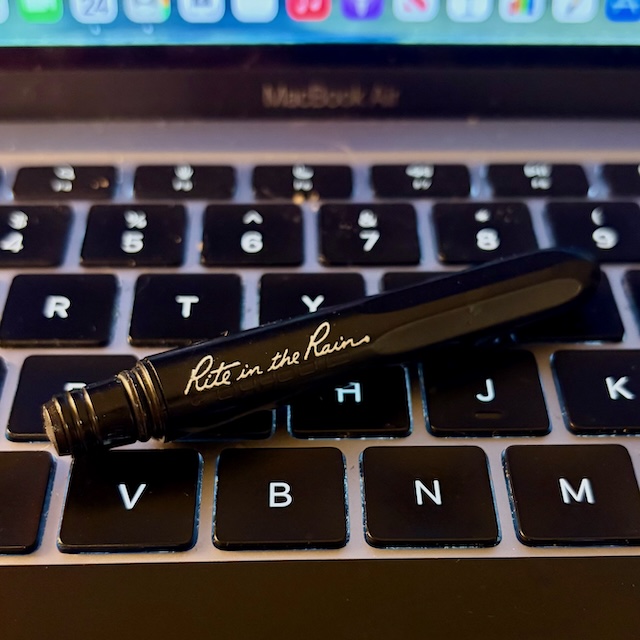
When I pulled up in front of his condo, Steve asked me to sign both copies of the books I’d given him. I pulled out my trusty N°BK92 All-weather pocket pen and composed inscriptions while my elbow oozed blood. I’m really sorry I didn’t manage to sign my name in blood. As I drove toward home, I was especially thankful we would be in time for the end of happy hour at our beloved T. Boyle. In my book, a tumble on a hard court earns a bourbon. And if one is good, two are better.
I was very grateful I hadn’t hurt myself. I couldn’t remember the last time I fell on something as hard and unforgiving as a tennis court. Decades, for sure. As much as I don’t want to do it again, I was impressed that I’d gotten away with it even once. The abrasions are pretty much healed now. I still have a bit of tenderness in my right hip. The strangest part is the stubborn pain in my right side. At first I thought my right elbow had been driven into my ribs but the pain wasn’t exactly in my ribs. It’s still hard to sleep on my right side. No matter where it was, I was very happy I didn’t have to sneeze a single time over the next couple weeks. It would have hurt.
Which brings me back to gratitude. And to the fundamental constant in tennis: uncertainty. Lord willing, as my father would say, I will be 65 in a couple months. As much as I hope to avoid another unplanned trip to the court’s surface, I am undeterred. Tennis and I are good. We’re both worth it, come what may. Tt
Kimony could be my favorite tennis accessory brand. There’s just something about companies like Kimony with just the right vibe (no pun intended). Plus, tennis accessories like grips, tools and dampeners can be so engaging on a personal level. As someone who has done a lot of business in Japan, both in my previous marketing life in high-end audio and later in golf, I appreciate the ethos of Japanese companies, especially small ones like Kimony.
They know what they’re about.
They know what matters to them and they know how to make it.
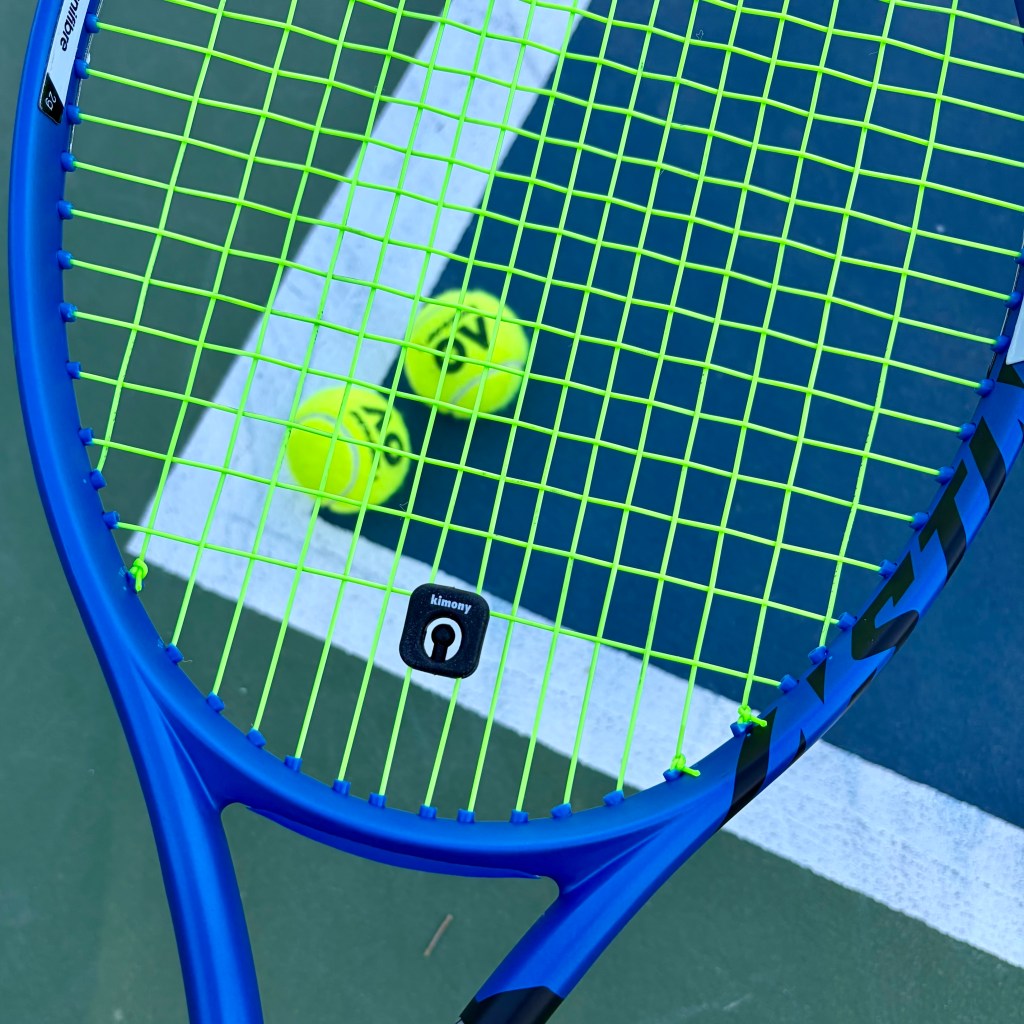
I think I’ve used most of Kimony’s replacement and overgrips and each has been excellent, at least on par with offerings from much larger companies with more familiar names. But, this is my first experience with their dampener, The Quake Buster (or how I wish I could use the iOS Text Effects to make the letters in Quake explode!). As usual, I was first attracted to the available colors (I chose clear and black). But I had another motive respective to trying the Quake Buster and that was the way it attaches to the racket at the top and sides and the fact that it’s basically square (so as to maximize string contact) and also the fact that the experience of others who wrote about their experience with the Quake Buster state that the dampener is quitesoft.
The words quite soft translate to a thermoplastic that has a fairly low durometer (the lower the durometer the softer and more maleable a material). Harder dampeners (like Head’s)lack significant compliance to dampen much of anything. That said, the design of a dampener like the RTP Shocksorb may have gone too far, with a durometer that’s simply too squishy (and heavy). The question is whether the Kimony Quake Buster gets it just right.
The Kimony Quake Buster in my Head Instinct MP
The Kimony packaging has some copy on the back so I had a buddy of mine in Japan translate for me:
Beforeimpact, the mushroom, which was in a stationary state relative to the Quake Buster main body, moves its head in the direction of the ball due to inertia at the moment of impact.
After impact, while interfering with vibrations from the strings and other sources, it absorbs (dampens) vibrations in all 360-degree directions.
In other words, the mushroom works in a truly magical way.
Come on, a magic mushroom! This is obviously the very best quality ever when it comes to a tennis string dampener. Seriously, I think the Quake Buster is a very well-executed product. The way it attaches to the strings, its shape and perhaps most importantly the durometer of its thermoplastic make it an excellent dampener. The sound isn’t dull but retains a slightly resonant thunk that is quite pleasing.
This has been bothering me for a while. How should a club player warm up to serve? My main problem is this: I tend to hit too fast too early. What’s strange to me is that the speed seems to come automatically. In other words, I am not trying to hit my serves fast or hard. Compare this to my baseball career where I found it very easy to warm up gradually. I enjoyed playing short toss before moving up to long toss before refocusing on pitching at full speed from 60 feet 6 inches. For me, properly warming up to serve would take a little more thought. At first I tried to work it out by myself but I continued to find myself at 75% with two or three serves.
That can’t be good.
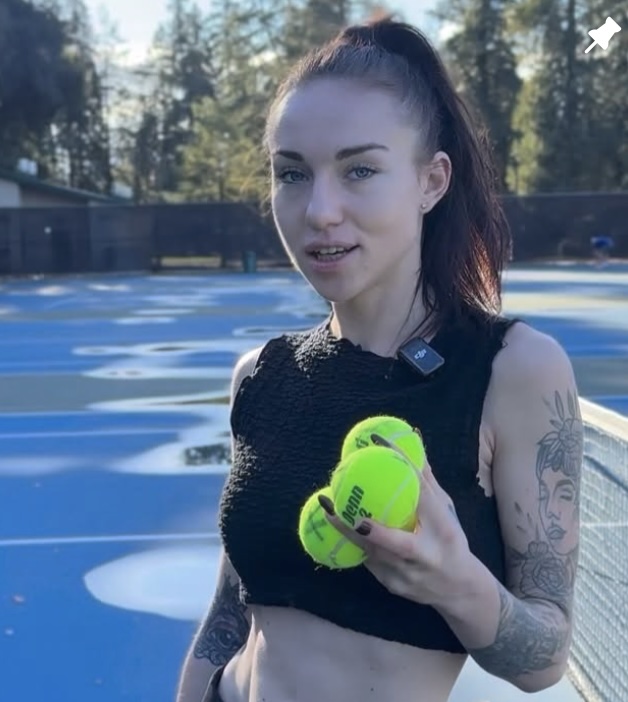
Lexie, My tennis coach!
So, I decided to reach out to two trusted experts. Coach Lexie is one of my favorite tennis coaches at Instagram. Every time she says, “I’m Lexie, your tennis coach.” I smile. It’s nice to think that I’m actually Lexie’s student and her posts always make it feel that way. When I asked her about warm up to serve she was generous enough to write this for me.
“When I warm up the serve, I start by preparing the body and shoulder before hitting balls. I use light dynamic movements like arm circles, shoulder rolls, torso rotations, and wrist prep to open up my range of motion.
On court, I add shadow swings and light throwing to groove the service motion and rhythm without tension. From there, I move into a progressive serving routine—starting easy to find feel, then gradually adding direction, different targets, and serve types (flat, slice, kick), always focusing on a consistent toss.
A good serve warm-up is about rhythm and feel first—speed comes last.”
All of that make sense to me but it’s not easy. I have tried to formalize the process as much as I can. I start by tossing along the fence (another technique Lexie shared on Instagram). My toss tends to creep lower and lower as I hit my serves faster but a fence-high toss allows me body more time to impact the ball with a nice sense of flow.
Then, I move to the baseline and I toss and catch, another bit of advice from Lexie. This is very helpful because it gives me instant feedback about whether my toss is even in the ballpark. Sometimes it’s not.
Then, I finally make contact with the ball. My goal for the first ball is to hit the ball as slowly as possible for at least five balls. That’s not easy for me, but I am trying. I promise. In fact, my practice goal is not to exceed 30% when I am hitting serve after serve. Hey, I’m gonna be 65 in April. Sixty–fucking–five!
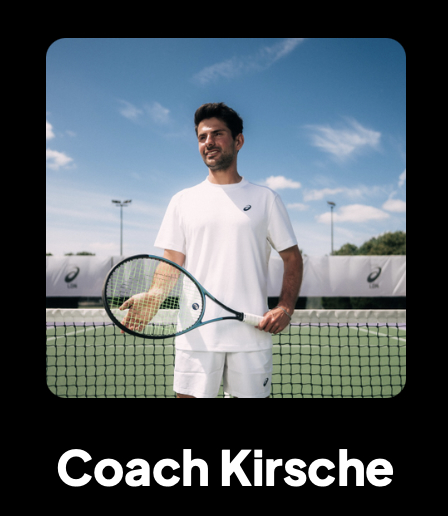
Another Instagram coach who has helped with my warm up is Coach Kirsche. As soon as I started to follow him he came out with a warm up guide for the shoulder. Talk about timing!
Me? I love this dynamic resistance band stuff but I have to admit that I have a hard time implementing it. Why? Did I mention I was going to be 65 in April? Thing is, every time I’ve tried any resistance band work, even light stuff, I have ended up with a shoulder that’s more sore than it would be after thirty serves. Still, I am going to dedicate myself to doing more of this. I just need to find the sweet spot between overdoing it (my style) and not doing it at all (also my style. You figure that out.
I’d like to extend my sincere thanks and gratitude to Lexie and Kirsche. Just the feeling of having two great coaches out there who want me to improve makes me want to improve even more.
Yeah, I know. Stew looks a little intense here. But stay with me while I fill in the blanks. A year or so ago I was hitting serves at The Rose Bowl Tennis courts right here in Pasadena. Suddenly I hear a voice over the ANC of my Apple AirPod Pro.
“Hey mate, you wanna have a little hit?”
Now remember I was beginner at the time (I still am, when you get right down to it). That was the first time anyone had ever asked to hit with me. Truth be told, I didn’t want to. Of course, I said, “You Bet!” In my ears rang the words of the MIB. “Paulie, you’re going to have to put yourself out there to meet people to play tennis with!”
First time and last time, hitting balls with Stew was an adventure. He hit the ball great and moved lots better than me being a couple years younger and much fitter. But, there weren’t untold miles between us and I never felt like Stew was bored by hitting with me, at least that’s how I want to remember it. After our hit, I asked Stew what his deal was and he told me he flew the Qantas route from Brisbane to LAX. That put him in Pasadena from time to time, usually for three or four days.
So, every now and then I’d get a text or email from Stew and we’d meet up at the Rose Bowl and give the ball the old what for, or what Stew called, the full treatment. We rallied a lot and played some. I was overjoyed to have held my first serve but over time Stew would grind me into dust. But, the grinding process was fun and educational. Stew plays a lot of doubles so whenever the opportunity arose, he’d come in. After this happened a few times I noticed he was waiting to play a forehand volley at a sharp angle. Once I grasped this pattern I tried to make sure never to give him a shot he could hit with his forehand when he was approaching the net. So was born my earliest awareness of tennis tactics en situ.
We had some good chats. I liked to ask him about where he lived and how he came to be a pilot. He told me about his club and how he liked to work on his diesel Jeep. Stew was like me. For us, it was never too hot or windy or cold to play. When it was time for me to go, Stew would scan the courts looking for someone else to hit with. Looking back, I wish I had freed up more time to play when Stew was in town. I was especially sorry to have missed Stew when he wandered his way to the San Marino Tennis Club looking for a hit. The guy was ready to hit anywhere and with anyone.
The end came, as it always does. A few weeks ago I reached out to Stew, asking when he’d be in Pasadena. He sent a message that said his route had changed planes to the Boeing 787 and absent a very unlikely development, he wouldn’t be flying the Brisbane to LAX route anytime soon. Sigh.
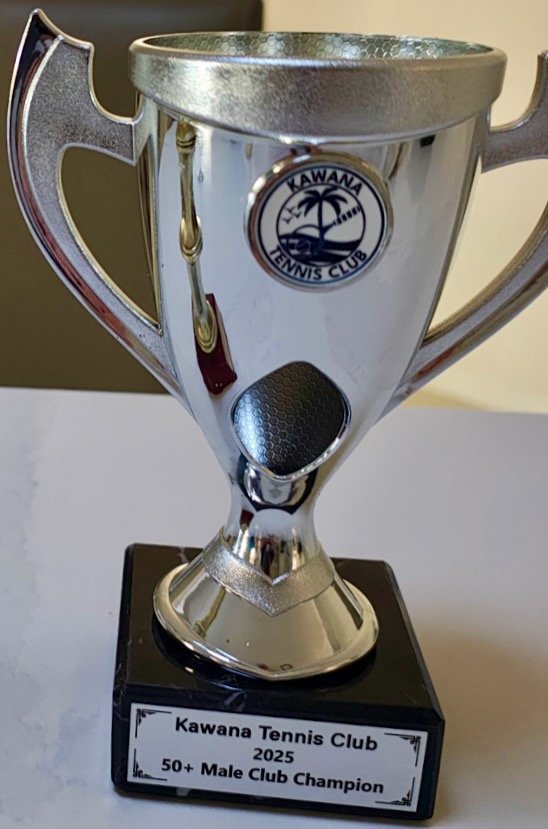
Then, a few days ago, I got this photo from Stew. He had won his club’s, The Kawana Tennis Club, Over-50 Men’s Singles Championship (I told you he was good!). Of course, I’m happy for Stew and he told me he was chuffed. Still, I miss Stew and miss playing with him (in that order). I don’t know how it could happen but I hope our paths cross again. Stew’s a great guy to play tennis with and he taught me a lot without even trying.
As those of you who have read Tennis thing know, I owe my tennis to my brother, MIB. He was the one who told me, before even meeting me in person, “Paulie, you would love tennis.” MIB was right, as he so often is. What I doubt, though, was that MIB would have expected how long I would take my twice-a-week lessons with my coach, Caesar Schwarz. It’s been a bit over two years since I started studying tennis with Caesar. I didn’t start out studying the game, I think it became a study gradually, but it is what tennis remains for me.
What’s the diff, you might be asking? Think back to playing dodge ball when you were a kid. How long was it between your first hearing of the word dodge and the moment when someone was chucking a ball at your head? Most games are learned as they are played. Many people, most people, likely, learn terms by playing it.
But, I have not. I have learned to play tennis while studying it. I like to watch tennis played whether I am watching a WTA or ATP pro or a little kid with marvelous footwork.
And, I love to hit the ball.
What I have not focused on is competition. This is true partly because at my age I am not especially competitive. I’m not even in a competition with myself, to be honest. I want to play tennis correctly out of a motivation to master something at once new and satisfying. That’s an intoxicating combination. But, the question is does the person on the other side of the net count and is anyone keeping score? When Caesar is the guy, he matters. It’s the precision and intentionality of his play that allows me the physical and mental opportunity to learn. He has raised me since I was a 60+ year old tennis newborn and has been instrumental to everything I’ve learned. If any elements of my game are AOK, it’s because of my coach.
But, and this is something I mused about in Tennis thing, does one need to play tennis, keep score, enter tournaments, seek the humiliation of their opponents to really play tennis?
There’s this old broad at Calabasas who seems only to hit with whichever pro is available. I have never seen her playing with anyone other than a coach. There’s no serving and each coach tends to hit the ball directly toward the old broad. But, the old broad bashes the ball back with fierce effort and likes to collect winners. And, this brings me to this quote:
“Some people, they keep on working with a coach, but the coach is just teeing the ball up for them. That’s no way to learn tennis. This is how you learn the game, right here.”
The previous quote is from Brisbane Stew. He’s a Qantas pilot I met at Pasadena’s Rose Bowl tennis courts. Unlike me, he has scads of tennis experience and is quite fit for 60. Unfortunately, he just told me the Qantas Brizzy to Los Angeles route is now flown using the Boeing 787. Unless Stew changes aircrafts I won’t be seeing him soon. Bummer. Playing with him was always amusing and educational. Back to his quote. He’s not wrong. Playing with him or MIB is not as easy as playing with Caesar but there’s more to it than that.
I have mentioned before that an example of Caesar‘s particular genius is the ability to hit shots that are consistently challenging for me, but only rarely beyond my capabilities. The other day, I was watching as he served to an elderly, but very fit student. Caesar had to abbreviate no fewer than three elements of his motion, that I could see, in order to hit a serve that was challenging to his student but not overwhelming. Now, can I imagine that I could get better faster if I consistently played with someone like Stew or MIB? I think the answer is undoubtedly, yes, especially if better is defined by advanced competitive ability. However, there’s a significant caveat. And that caveat involves the questions of form and balance. When the ball is coming too fast or bouncing too high or has been hit too wide or too shallow or too deep the kinds of corrections a beginning player like I have to make must ofetn be done in great haste. Not surprisingly, great haste, seldom results in a shot struck with good form or balance. And, there’s the rub, at least for me.
It’s a great understatement to say that I’ve enjoyed the meditative aspects of tennis. You see, I am on the eve of cutting back on my lessons with Caesar. This change is driven solely by economics. If a small shitpile of cash were to drop onto my head, I would gladly spend it on more frequent and longer lessons with Caesar, but this does not seem likely.
Early on, I remember Caesar saying that when he and his younger brother, Darius, were taking tennis lessons as kids their family could only afford one lesson each month. Caesar’s dad was a smart guy because he made sure that his sons actually practiced what they were taught during their lessons. That’s my plan and I will be similarly dedicated even though I will still be having four lessons a month. Still, I’m not going to be happy about it.
When I go to sleep at night I am thinking about my footwork as I move toward a deep, high-bouncing back hand. I’m not thinking about how I can beat someone or keep them from beating me. It will be interesting to see how things differ and stay the same in 2026. Tt
Shortly after I started playing tennis, back in the late summer of 2024, I began to sift through the internet looking for information on players, coaches and the game itself. I wasn’t usually looking for something or someone specific, but I always have a special interest in coaches and the techniques they use to teach. Tennis, it turns out, is not much different from golf. There are a lot of gurus, a lot of experts standing around, ready to tell players how the best players in the world do what they do. After playing for a while, taking lessons twice a week, I began to apply a lot of what I know about golf teachers to what I was learning about tennis coaches. As a group, tennis coaches are far better at what they do than golf teachers. I describe the differences in Tennis thing so give it a read to learn more.
Walter Redondo
One of the more interesting coaches I stumbled upon was Robert Lansdorp. He came, seemingly, from nowhere but was an influential coach to Pete Sampras, Lindsay Davenport, Tracy Austin and Maria Sharapova and many others. Lansdorp, born in the Dutch East Indies, came to California in the early 1960s. Little is known about what he did during that first decade but sometime in the 1970s he was introduced to San Diego’s Walter Redondo.
In an interview given toward the end of his life in 2024, Lansdorp said the most talented player he ever worked with was Walter Redondo. Thinking for moment about the list of other players who Lansdorp coached, they of the 25 grand slam victories, made me want to learn more about Walter Redondo. It turns out Walter Redondo was easy to find at his San Diego art gallery.
Tennis thing: Walter, I’ve been trying to decide whether we should talk about art first or tennis and I’ve settled on art. What got you interested in art and how old were you?
Walter Redondo: Art really became interesting for me around the age of six. Before that, I hadn’t paid too much attention to it. One day, I was walking down the hallway of the house we lived at the time and my older brother was in his room and as I was passing by I saw he was doing a drawing so I walked in and looked at what he was doing and got a piece of paper. And, basically, I drew what he drew with the materials he had around him, and as I looked at my drawing, I recognized that mine was very close to what he was doing. I thought to myself, well, if I can do what my older brother does it must mean I can make art.
Somehow it just registered for me that, OK, I enjoy art! From that point art just started to take shape in everything I was doing. From the time I started first grade my teachers recognized I could draw and I was creative. My teachers and school nurtured my art by having me create their classroom display boards and eventually others at my school started and realizing what I could do. Before I knew it, I was designing and creating works for the stage for performers at my school. So, really, my school nurtured my art early on.
Tennis thing: Ok, same question about tennis. Who got you into the game and how old were you?
Walter Redondo: Oh again, I was around probably the same age, about six or seven. My grandmother was the one that actually got us involved in tennis. Because there were so many of us in the family, there were nine of us, and my father being in the Navy and was away a lot, and my grandmother needed to work and so on, but she had found a sport that she loved. She would watch films of Helen Wills Moody and the other great players and figured out what she could do to get us involved in the sport. Because she truly loved tennis, she would bring us to the tennis courts and so it was my grandmother who introduced tennis to us and from that point it just kinda took off.
Tennis thing: You know Walter, what put you into my mind was an rather offhanded comment by Robert Lansdorp in an interview he gave some years ago. In it, he said you were the most talented player he ever worked with. And I thought to myself, Lansdorp worked with Sampras, Sharapova and Davenport. How many slams among that trio? 25? But, he mentions you, Walter Redondo. But right now I really want to know more about your art and especially your gallery.
Walter Redondo: You know my art is constantly evolving. Obviously, as we move, just as a tennis player does, we’re trying to sharpen skills and trying to evolve into a stronger voice. When I think about art and tennis there’s such a similarity, but when I think about, you know where I am in my life as as as an artist, and where I’m in my career, figure what was important to me as I had a little bit more control over my art career.
Part of that was being able to show and grow because often times when you get involved with the gallery, you develop a clientele that you actually start to paint for, to some degree. And so you kind of move in that way, which is a great thing also because it’s developing me as an artist and as a painter. So, I thought to myself, as I’m sitting in my home, that all this art is on the walls, and I think, as I was evolving I started recognizing, as well as the gallery owners were starting to recognize, that I was selling a lot of my work.
And often times some owners would say that my work kept their gallery open in a given month. Abd, I was so gratified to hear that. It was confirmation that I needed to give my own gallery a shot. I’ve always dreamt of owning my own gallery. That also says a lot about where I am spiritually. I love believing. I love faith. I love entering into something with the understanding that, you know, the work ethic, the whole thing of being able to believe in something that hasn’t yet transpired but will by believing in faith and hard work.
I like the whole inner person of my being to grow. And I think as a tennis player, or you as a writer, we want to evolve and grow as a person because it’s the person that we basically play with and so our person becomes stronger and more confident in the things we believe. There’s a difference from what I choose to believe and that for me is where I’m with my art. You know understanding that what I’m painting, what I’m receiving from the outside, whether it be someone’s giving me something they look for as far as a commission or whether it be that, you know, I’m picking up things around me in my environment that hopefully will make a difference or change for someone’s perspective our outlook on the way to see life.
Tennis thing: I’m right with you on all of that and I think whenever you create anything, particularly in visual arts but also perhaps in writing, when you start you often don’t know when you’re gonna finish and sometimes you don’t know if you’re going to finish. For me anyway, as a writer in creative and in business writing, you always finish because it’s the job you have to do, but in creative writing you only finish if you want to and if you need to. You have to have faith.
Walter Redondo: Personally I think it’s a such a privilege to be able to move in this way. I think this is for everybody really, you know I was literally thinking and taking notes for myself in regards to my approach to art. And, people will ask me how do you start? And, you know, we basically start with nothing but once we start that first stroke or that first line you’re developing, but then there’s kind of a mess. You know as I’m moving along and I’m just scattering paint. I’m moving paint. I really don’t have anything in mind but I’m doing this with a lot of energy. But, what’s beautiful about it is the discovery that while I’m doing this I’m taking notes of little details here and there so that I can resolve all these mistakes, or what one could think are mistakes, but actually be able to use them. I think that’s the beauty of being able to be creative is understanding how a problem gets solved just like we do on the tennis court. I like that the gathering of thoughts in the energies and even the discipline to focus as long as it takes us to get to a certain place, I think that’s a real privilege for all of us, whether it be in business or being creative with art or playing tennis.
Tennis thing: When you speak about resolving mistakes it reminds me of something one of the tennis coaches where I play said. One day when I was sitting by the courts getting ready to play and he walks by and says, “I’ve just discovered the secret to tennis and I’m gonna share it with you.” I said, “OK, Austin, what’s the secret?” He says, “Adjust. Then, when you’re done adjusting adjust again and just keep on adjusting.”
Walter Redondo: Isn’t that so true? And another thing I’ve discovered, you know, as I have thought about this and spoken with a number of the students I’ve worked with when we watch the top players: They have come into such a confidence with their own game style we would think that they are not making adjustments to their opponents, but their opponents are making adjustments because of them. And here I’m thinking getting to the point where you are just playing your game and you stick to it, everyone has to adjust to and accommodate what you’re doing. That’s a great place!
Tennis thing: Now let me take you back to Robert Lansdorp, so we know he was impressed with you as a player but how did you come to work with with him and what was the experience like for you?
Walter Redondo: I think I was the first player he worked with who became recognized. While we were over at Morley Field Robert had just started teaching and he recognized that our family was not well-to-do so my grandmother who is the one that got me started. We would go around and pick up aluminum cans out of the trash cans. But, it was really out of the kindness of his heart that Robert started working with me. It was really out of God’s grace to have a gentleman of Robert’s ability become part of the process of my life. He taught about discipline and a work ethic. Robert worked me hard but at the same time he recognized how much I loved tennis. In later years, Robert would come down San Diego and I remember him saying, “You know Walter, as a coach you see a lot of players who come to you, but there will only be a very few who have something that’s truly special. It’s not necessarily how they hit the ball but there’s something that’s a little bit different. It could be a work ethic. It could be a longer focus or it could be a kind of hunger. You’re going see a lot of players, but they may not have the substance that it takes to be a great player.”
Tennis thing: I think tennis more than any other game I can think of brings element of artistic expression and here. I’m thinking about the court as a canvas, the arc of the ball the angles, all those angles! As one who has been a high-level player and a professional artist can you say something about how art relates to tennis and tennis relates to art for you?
Walter Redondo: Oh yeah, so the beautiful thing about this whole thing is that in tennis and art we strike with we make one quick strike at the very beginning, right? We hit a ball. I put a mark on the canvas same thing at the very end. So, regardless of what happens we’re ending with two strokes in both tennis and art you know? The similarity of the intuitiveness, the whole play on how the focus and the way I may use space on the canvas to lead, or mark, or line to lead the eye because all I’m trying to do is lead the eye to a certain place on the canvas in the same way I would with, maybe, locating a ball in the corner of the court to open the space on the court. So, all I’m doing is taking what I’m doing on the tennis court and applying it to a canvas. So, whether it would be a color that’s a little bit more yellow, just for example, yellow being a very happy color. Orange being very energetic, red passionate, so I’m combining all these colors with lines and space. The beauty of this, I think what I love about is, and being involved with the process I’m sure you totally understand. Often times I’ve shared with individuals that in tennis when I go to sit down between sets, I’m just not drinking water. It’s like me stepping away from the canvas. What I’m doing as I’m looking at the canvas and I’m organizing my mind how I’m gonna resolve this painting, the same way I would in regards to OK this is what’s happening in the last few games. I’ve got my notes now. I’ve got to try to resolve this match and how I approach it is really going to be Important. So, that’s kind of really my whole take; being confident with my strikes on the canvas, letting go and surrendering to the process and believing in the outcome.
Tennis thing: Walter, I want to thank you for spending this time with me and having this chat about art and the game we love.
Walter Redondo: I’m honored, Paul. It’s been a lot of fun!




 Tennis thing