Author: Paul Cervantes

  • A Tennis thing chat with tennis professional, Long Dao

    I learned about tennis professional Long Dao while researching an article about the rise and fall of the Pierce College tennis team. I have come to think of community colleges like Pierce as stepping stones for students who lack something they need to go directly to a four-year college or university. Sometimes what’s lacking is financial, other times it’s academic and often it’s a combination of things that bring students to a school like Pierce. As a guy who went from Pierce to UCLA, I’m very grateful the school was there for me in all the ways it was. As I think back on the professors I had both at Pierce and UCLA I am pleased to think that, in many ways, it was the professors at Pierce who had the most consistently positive impact on me.

    I didn’t play intercollegiate sports while I was at Pierce but I knew they had a great tennis team. By the way, I went to Pierce in 1980 so we’re talking about a good long while ago. Finding out Pierce no longer had a tennis team was a real shock to me. You see, a couple years back I took up tennis and this has brought me to consider a lot of tennis playing what-ifs, one being a musing about playing tennis for Pierce back in the 80s.

    But, let me connect my first thoughts about community colleges generally to intercollegiate sports. It is more than a shame that Pierce College does not have a tennis team. To me, it points to an institutional failing that may be centered at the Los Angeles Community College District or it could be a home-grown failing with the administration of Pierce College in Woodland Hills. No matter. It is a very unfortunate example of Pierce College failing its students.

    Even though we’ve just reached the day when colleges are able to directly pay their so-called student athletes it’s important to acknowledge that only the most elite athletes playing for the highest-profile colleges are likely to see much of anything in terms of financial compensation. One can argue this an elevation of student athletes at all schools but I would argue that what it really does is create an even greater separation between elite athletes and the kind of true student-athletes who have always been a part of competitive sports at schools like Pierce, or even Division III athletes. More is the pity.

    I am very grateful that Long Dao, the last coach of Pierce College, has been generous enough to be interviewed by Tennis thing.

    Thank you, Long!

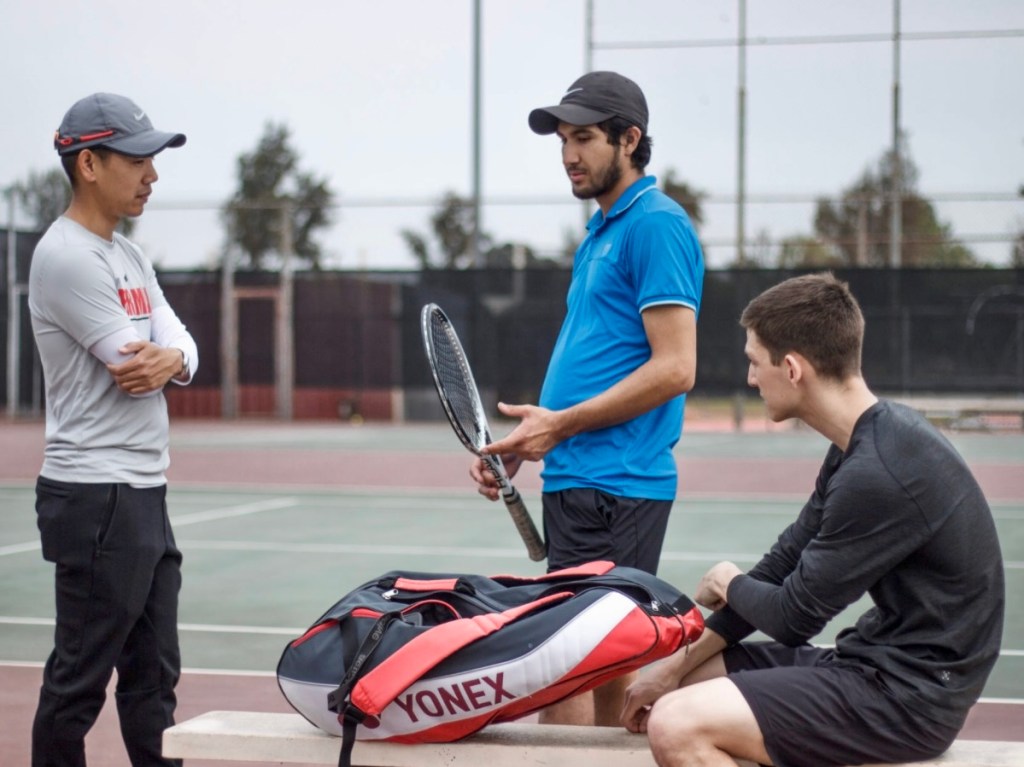
    Coach Long Dao with student athletes at Pierce College, 2019 (Photo by Chris Torres)

    Tennis thing: Tell me a little about how you got started in tennis. Who got you into the game and where did you first play?

    Long Dao: My first exposure to tennis was around when I was five or six years old when my family (aunts, uncles and cousins) would play and I would tag along.  But I never did any serious training  until I got to high school.  Essentially, I did not start my tennis career until I was 14 years old.

    Tennis thing: By the time you became a student at Pierce, had you ever heard of Coach Paul Xanthos?

    Long Dao: I had not heard of Coach Xanthos until the first day of fall practice when I joined the team in 2005.

    Tennis thing: How long did your own playing career extend? Did you continue to play while you finished your education at UNLV and Long Beach?

    Long Dao: Competitive tennis ended for me right around when I transferred to UNLV.  I may have played a few tournaments here or there but training and regular tournaments practically ended around then.

    Tennis thing: I know you were an assistant at Pierce before taking over the team yourself. What were the most important lessons you learned from Coach Xanthos? Also, what did you have to learn for yourself the hard way, from your own coaching experience?

    Long Dao: Simplicity.  Coach Xanthos would always try to simplify the game for us as players.  That is something to this day I try to do for my students.  

    As a player, I was always one to drill and drill, be extremely repetitive in training, till I reached my goals, whether it was to perfect a shot or execute patterns.  I was relentless in how I went about that.  I have come to learn that many students, especially the younger players that I have worked with, learn and process things differently than I do.  So being able to change teaching styles to reach and connect with different players was something that I had to learn over time.  

    Tennis thing: I didn’t know Pierce was forced to abandon their tennis program until earlier this year and I was very disappointed. As I point out in my article, it was hard to believe a school with an enrollment as large as Pierce could not field a team. I know it’s ancient history now but do you think Pierce valued its tennis history enough? Could the school have done more to keep a team under the school’s banner?

    Long Dao: Short answer, no. I have some of the fondest memories there as a player and coach.  I have had the pleasure of meeting wonderful people there from teammates, players and staff members to fellow colleagues and coaches from Pierce and other schools, many of whom I’m friends with to this day.  Some of my favorite coaching memories happened there, taking the team from last in the conference to challenging for the conference team title and winning an individual conference doubles title. 

    But, it was shortly after that accomplishment I learned tennis at Pierce was, sadly, not valued as much as I had hoped.  It simply was another class that was offered and if it does not generate the revenue from enrollment or participation than, like many other classes or offerings at the school, the program will end up getting cut.    

    Tennis thing: I’m sure it’s very different for you, being a tennis professional, rather than coaching a group of college students. Do you miss coaching a team and can you see yourself coaching at the college level down the road?

    Long Dao: There are some aspects of coaching a team that I miss and others I don’t.  Will I ever coach another college team? I honestly don’t know.

    Tt

  • The Rise and Fall of Tennis at Pierce College

    A couple days ago, I stood at the net with my new Monday hitting partner, George. I was helping him with his ball striking. No, not his tennis ball striking but his golf ball striking. My instruction is not what’s interesting about the story. George was talking about playing a local course, the Moorpark Country Club. I winced, knowing what I did about his game. I tried, subtly, without saying he wasn’t nearly good enough to play that course, to convey that golf should be played only on courses that a player can handle.

    “Tennis is different,” I said. “Look at this court. It’s the same size a every tennis court you can name. Even Pope Leo XIV’s court is the same size as every other tennis court though we cannot be sure of the dimensions of Pope Julius III’s court (1550-1555) since it no longer exists.”

    Even though the popularity of tennis, at least in the United States, rises and falls, tennis courts are everywhere. Nearby Pierce College in Woodland Hills has nine tennis courts for its 20,000 students. What it doesn’t have is a tennis team.

    Pierce’s Tex Smith, 1962. Photograph by George Birch.

    Founded in 1947 at the Clarence W. Pierce School of Agriculture, Pierce has been home to some great tennis teams and tennis players. Its first team hit the scene in 1961 and by the late 1970s Pierce was a local tennis powerhouse. Coached first by Nick Buzolich, a 6′ 7″ alumnus of Pepperdine, himself a fine tennis and basketball player. Buzolich lost in the quarter-finals of the U.S. Clay Court Championships to Pancho Segura. Early players for Buzolich included Steve King and Tex Smith, both valley boys.

    Starting in 1965, Paul Xanthos took over the Pierce team for the next 30-plus years. By 1995 the team had amassed a record of 550-94. I attended Pierce from before the time I graduated from high school in 1979 until I transferred to UCLA in 1981. I can remember seeing the name Xanthos on virtually everything on campus that had anything to do with tennis. He was a walking institution and has been recognized by both the USPTA and the Intercollegiate Tennis Association.

    By 2005, the Pierce team was led by a former student of Xanthos, Long Dao. A year later, Xanthos died in Hidden Hills. From then until 2020, Dao caoched the team. As late as 2018, the program had success in sending players to the The Ojai Tennis Tournament with the entire roster nearly advancing to the competition. Darvel Lossangoye went the farthest in the singles competition reaching the Round of 16. The 2018 Pierce team finished the season 7-4.

    Days before the team’s February 2020 opener, Interim Athletic Director Susan Armenta made the decision to pull the plug.  “Looking at the previous seasons, when it came to the facilities and participation, it made the most sense to drop the program and not pursue another season using some of the resources that we have,” Armenta said. The previous season, Pierce tennis was disqualified heading into every match because of their player shortage. The era of Pierce tennis that spanned from 1961 until 2020 had come to an end.

    As a Division III school, Caltech does not offer athletic scholarships. But, with a total undergraduate enrollment of right around 1,000 the school is able to field a men’s (and women’s) tennis team. I know, I’ve seen them play and there are some excellent players on Caltech team of eight. As I noted above, Pierce College has something around twenty times the number of students as Caltech, but no tennis team.

    Despite these facts, the then-Dean of Athletics Genice Sarcedo-Magruder said one of the reasons the program was dropped is because of the low enrollment. “The athletic programs are also classes,” Sarcedo-Magruder said. “If there are less than 15 students they tend to get cut, so that is part of the challenge. Our facility is not that good so when you bring in players and they see the courts, they would get discouraged.” 

    That last sentence is what really motivated me to research and write this. When we think of Pierce we are thinking of eighteen to twenty year olds who lack either the academic preparedness or money to attend a four-year college or university. To believe that population would show up at Pierce, see its nine courts and then move on strains credulity. For reference, Division I UCLA has three tennis courts at its much-vaunted Los Angeles Tennis Center.

    Obviously, the issue is not that simple. But, I fear the essence of the problem is far deeper. Pierce College doesn’t need elite athletes. It needs true student athletes. I’m disappointed in the school’s inability to generate enthusiasm for a once-great program that made its mark decades ago. Is it too much to ask for the administration to do all it can to show how those past successes can lead the school to a future that includes tennis? Tt

  • Let’s GoPro!

    I just bought a LN GoPro Hero 10. It should be here, well, I’m not sure when. The purchase was somewhere between an impulse buy and a planned purchase.

    Let’s Go…Pro!

    It’s planned from the standpoint that my only current remaining camera is attached to my aged iPhone 11. My Nikon D300 mini-rig is living out its retirement in Michigan and being gently cared for by the MIB. My loyal, if lake-water-challenged, Panasonic Lumix LX3 is vacationing there, too.

    So, I’ve been looking for a no-frills, rugged, very compact go-anywhere camera, preferably with a fixed lens. I just don’t seem to take P&S cameras along enough. They always seem a bit flimsy (motorized lens) while the D300 always seemed overly bulky, because it was.

    I’ve also been looking for a way to record the horror show I call my tennis serve. Sure, I could bolt my iPhone to the fence but something about that doesn’t appeal to me. It took a while but the idea that a GoPro could address both issues came all at once. From a still-photo perspective, the ability to extract still images from a video at full resolution seemed like a real plus.

    As with all things, we will see. Tt

  • The Cancha BBB has landed!

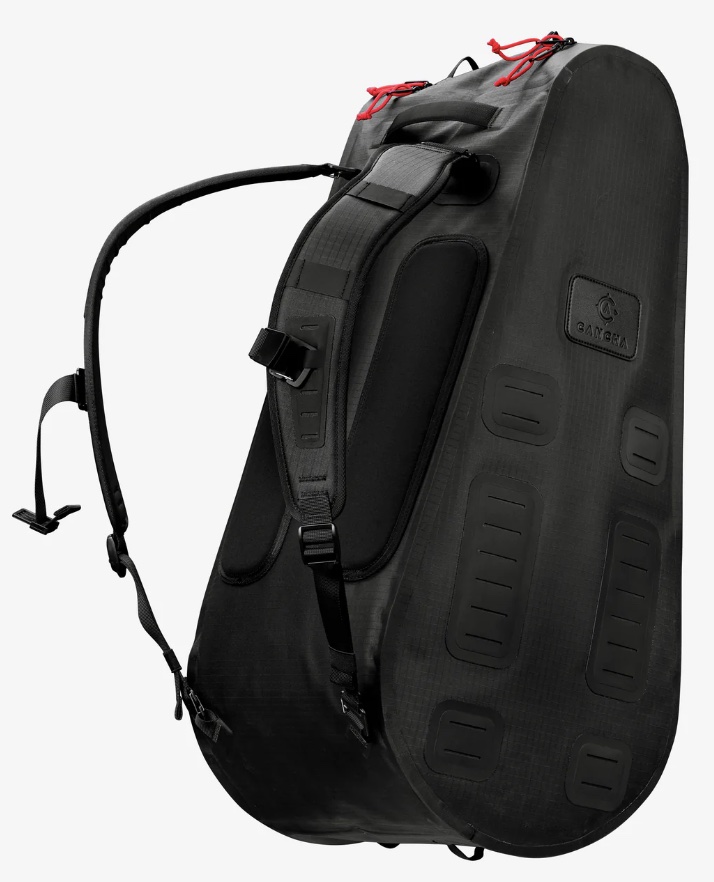
    Ok, the BBB (Big Black Bag) is not really called the Big Black Bag. Man, you guys are sticklers. It’s called the Racquet Bag Pro and it’s on sale right now. I was excited to get the BBB, sorry, the Racquet Bag Pro to see how much progress Cancha has made since they made my bag, the now-discontinued Original Racquet Bag.

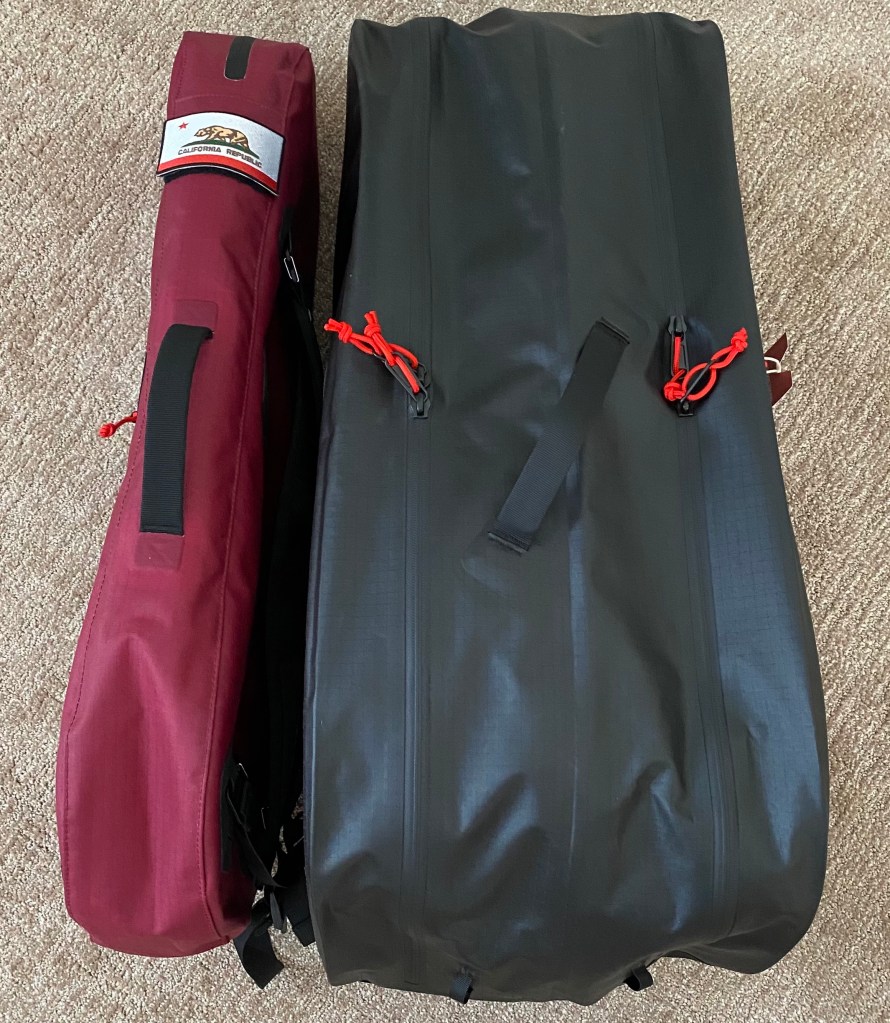
    The BBB and my beloved Original Cancha

    But, the problem is I am more of a small-bag kind of guy. Think of me as a tennis bag minimalist. Marie Kondo would approve, I’m sure. The good new is the Man in Black is a big-bag kind of guy, so I’ve seen the new Cancha to him. If I know the MIB, and I do, he’ll put the Racquet Bag Pro through its paces and then some.

    My own observations about the Racquet Bag Pro are that is a much-refined bag compared to my Original. Material quality seems of the same quality and maybe even a bit more substantial. Everything seems well considered. Note how the horizontal carrying strap is angled. That makes the bag naturally easier to carry and lift without the bag feeling unwieldy. It’s and smart and logical feature. Now ask yourself why more companies don’t think of making their bags like this.

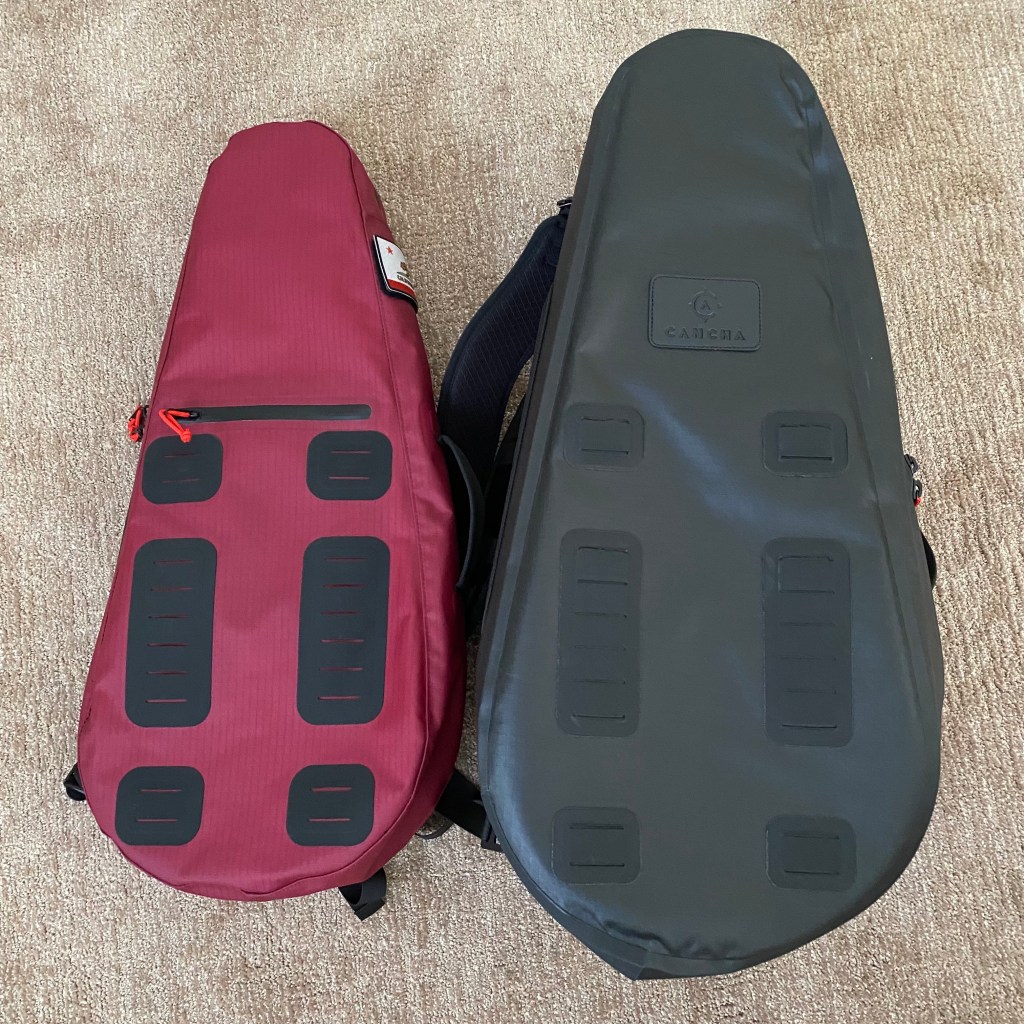
    Interesting that even the BBB’s cross-section is larger than the Original’s

    I’ve made it a mission of mine to fully utilize the Cancha’s attachment points. The company refers to them as RF Bonded Hypalon Molle Patches for Add-on Accessories.

    Uh, yeah. Me? I’ve never used or even heard the term Molle Patch until after I purchased my Original Cancha. So, I started to research them. What I found were a lot of companies using the word Molle to describe a variety of very similar products, respective to their function. I have to admit I hoped Molle would be a more general ecosystem rather than one, primarly, suited to other products from the same company.

    In other words, I dig Molle conceptually but have yet to make them quite as useful as I hope to in the future. For a while, I saw my Original Cancha as a do anything-bag if I could utilize its Molle attachment points to add space for shoes and clothes, when needed. At the time, Cancha Wet-Dry Bag was on backorder and I was getting ready to take a trip. I fantasized about modifying a generic shoe bag with Molle but I hit a lot of road blocks. I know. I should just buy the Cancha Wet-Dry bag. But I thought I was so, so clever that I could find an effective work around.

    Anyway, I’m excited to get MIB’s take on the BBB and to see his video review. From where I sit, Cancha has another winner here. Will the other bag companies catch up? I’m not sure they’re even trying. Tt

  • The Barking Tennis Coach

    I was practicing my serve at the local park when I overheard a coach on the adjoining court tell her student something to help her feel the correct move to the trophy position.

    “Take your arm up with the racket facing somewhat forward and somewhat down. So, as you go up the lid is closed. Then, as your arm goes up, you open the lid going back and then close the lid as the racket moves forward to strike the ball.”

    The lid is closed going up…

    That, of course, reminds me of Andy Roddick. Like I wrote in Tennis thing, the book, Roddick’s motion appeals to me.

    It’s short, purposeful and has no extra movement.

    But, back to the coach. I figured it would be good to get her contact info in case I wanted to grab a lesson with someone who sees the serve like I do, so close to home. So, I sat in the bleachers editing a short story I’m working on. The coach and the student continued to work, alternating between rallying and the student serving, or trying to serve, to the pro.

    Finally, the pro said, “Let me serve to you. Go ahead and return my serve if you can but mostly I want you so watch my motion. Watch the lid open and close.”

    Then I heard what sounded like a yelping dog. Since there’s a dog park near the courts I looked up to see what happened. But, then I realized the sound came from the other way.

    It came from the coach.

    Yup, the coach barked like a dog when she served.

    Nope, she wasn’t kidding.

    Nope, I didn’t stick around to get her contact info.

    Yep, I’m glad a dog didn’t get hurt.

  • From one-handed to two-handed and probably not back.

    Those of you who’ve read Tennis thing know I started out tennis with a two-handed backhand. My coach Caesar said, “I don’t care what you do after you’ve played for a year but I’d like you to start out hitting your backhand two-handed.”

    I was game but I soon found the two-hander less than pleasant. During my third or fourth lesson I asked if I could try to hit my backhands with one hand. Caesar patiently showed me the basics (he plays a one-hander) and I soon found the whole deal more intuitive and less physically challenging. The one-hander also helped to create a more effective shot. What’s not to like?

    “You hit a natural slice, mate. And, we’re going to build on it. We’ll add the topspin backhand when the time comes.”

    Justine Henin…accept no imitations.

    I was all in and began to informally curate a collection of the best one-handers I could find. My favorites, then and now, belong to Gregor Dimitrov, Stan Wawrinka, Roger Federer and the owner of the one-handed backhand of the gods, Justine Henin. If aesthetics matter, and they always do, there’s no comparison between the one and two-hander. As a wise person on the internet once said, “The two-hander has all the elegance of a monkey wrench.”

    Then, a couple things happened in a relatively close span of time. I managed to hurt my right wrist somehow. This happened about the same time as I began to learn and practice the topspin one-hander and exactly the same time I was hitting against the wall, a lot. The cherry on the sundae was Stew From Brisbane, my sometimes hitting partner whom I know from Brookside in Pasadena.

    To me, Federer’s backhand is second only to Henin’s.

    Stew’s 60, three years younger and leaner than me. He’s played for no less than 50 years and is a very solid player. Stew also likes to hit hard pretty much from the jump, which is not my style. He means no harm and I really like him. But, his shots to my backhand, especially the deep and high balls, ate my fledgling one-hander alive in addition to taxing my already-tender wrist.

    I did a little soul searching while I had a week off from my lessons with Caesar. By the time we were back at it I had decided to make the big switch to the two-hander.

    Before I did I conferred with the MIB himself back in Michigan. “Paulie,” MIB said. “I’ve tried going two-handed at least twice but I always go back.” Various internet gurus cautioned against making the switch especially for players who are older (40+, ha!) and who took up the game later in life.

    One guess who that describes…

    But, I did it anyway and it’s been fairly brutal. For me, the two-hander is an exceptionally difficult shot. Yes, high balls are somewhat easier but in total it’s a far harder shot from a purely physical standpoint. Sometimes, when I’m tired and the ball’s out wide, I will resort to my one-handed slice. Caesar always catches me and says the same thing. “Hitting your slice is Ok but start two-handed and go one-handed as your stroke begins going forward.”

    As if I have time to do all that.

    When my baseball career was on life support I made a last ditch effort to teach myself to hit left-handed. It wasn’t a bad idea. A lefty has a little bit of a head start to first and I thought it made me look like the kind of player who would try anything to be more versatile. It changed the way I saw the ball and I found power where I didn’t from the other side of the plate and lacked power where I had it as a right-handed hitter. It was weird, just like the two-handed backhand.

    Today is the first time I’ve put the sequence of the change and the factors that informed my switch together in my head. Don’t ask me why it’s taken me so long to see the threads. But, now that I have I think I will stick it out with the two-hander for now. I keep hoping for a breakthrough. Maybe next week or next month. Anything is possible.

  • Coming soon: My review of the Cancha Racquet Bag Pro

    Because, you know, I’m a pro kind of player.

    Not!

    But I do love my Cancha Original even though it appears to be (sadly) no longer available at the Cancha website.

    I do have to say that a little more room sounds like a good thing to me, especially since I hope to travel quite a bit this year. The Racquet Bag Pro looks like just the ticket when it comes to holding my current favorite rackets, shoes and various tennis and non-tennis gear.

    I’m really looking forward to reviewing it.

    Looks damn stealthy, doesn’t it?
  • Notes on a tennis coach

    I like taking tennis lessons from different coaches. My first coach will be my last coach, lord willing. Caesar Schwarz shepherded me into tennis and he continually guides and influences the development of my game, such that it is. He is both a fine teacher and a superb player.

    But, there have been others. Most have been good, one truly excellent. The best coaches read their students and think constantly of how best to impart what they know about tennis and maybe life.

    That’s obvious and sounds simple, but simple is not always easy. Today I was sitting on court waiting for my Monday hitting partner when the teaching pro on the other court started chatting with me. His student, who I’m guessing was eleven or twelve, was taking a quick breather. The kid looked good when he was working on his volleys. His backhand slice was especially tidy and well-controlled.

    The coach was a tennis player, through and through. Young, strong, tan, fit. He was dressed casually but not sloppily. Though the day was pure SoCal winter perfection, he wrapped a white towel over his head to protect from the sun. Only a real tennis player could pull that look off. I asked him if he usually taught there (a park in the Conejo Valley). “Nah, I usually teach at private courts. There are tons of good juniors out there. He’s not one of them,” he said with a wink and a tilt of the head.

    I felt bad for the boy with the nice slice volley. His coach, right or wrong, had betrayed him to a total stranger. I thought to myself that the coach just hadn’t been around enough to know when to hold his tongue, no matter if he was wrong or right.

    Later on I heard the coach talking about footwork to his next student. I didn’t get all of what he said but it was something about a Russian player he played against.

    “The Russians really teach footwork and a smart student will never forget. Once you have good footwork you can rely on it for the rest of your tennis life. You’ll never lose it.”

    I kinda wish I had heard the pro say that before I heard him diss his student. I might have tried to get a lesson from him.

    Tt

  • The smaller the ball the better the (sports) writing.

    I’m not sure who said that but I am fairly sure it’s true. The best sports writing is about golf, of this I think there’s little doubt. The reason for that is simple. Golf writing is either about hero worship, which never gets old, or tragedy, which also never gets old or both.

    Think about the boredom of writing about ordinary good golf:

    “And then our hero hit another ball into the middle of the fairway. Then he hit another ball into the middle of the green. Then he made another putt.”

    Now try this: “Our hero was nervous as he stood on the 10th tee, a tricky dogleg left. Memories of snap hooks into the woods bedeviled his mind as the wind swirled from right to left. He was already three shots behind the leaders with the hardest holes on the course still to be played. He hit a towering drive that was no more than ten feet left of his target line, but the wind freshened right at contact and the ball drifted left of the tree line before it vanished from view. Ten minutes later after having to strip down to his underwear in order to play his second shot from a pool of swamp water, the resulting ball miraculously caroming off a greenside tree into the center of the green, our hero unceremoniously sunk a ten-footer for birdie.”

    A tennis ball is a bit larger than a golf ball and my early reading suggests that writing on tennis is Ok, but surely not to the level of good golf writing. One problem, I think, is the nature of the action. Too little describable time passes between tennis shots to delve into a player’s mindset. But now I am getting caught on a tangent.

    I’m reading these three tennis books. In a couple weeks, I’ll review them. Technical Tennis is the most interesting, surprisingly, though the writing of David Foster Wallace’s String Theory is undeniably excellent and the story of Pancho Segura’s life in Little Pancho is as improbable as it is true.

    Tt

  • California Republic

    One of the unique features of my Original Cancha bag is the Velcro area Cancha uses for their patch. I get the feeling the Cancha logo is stitched onto their current models. But OG bags like mine use Velcro.

    This gave me the opportunity to get a nicely embroidered California flag patch from a very nice seller on EBay.

    Here’s the result. Now my Cancha bag rocks even louder than it did before! Tt